
By 1808Delaware
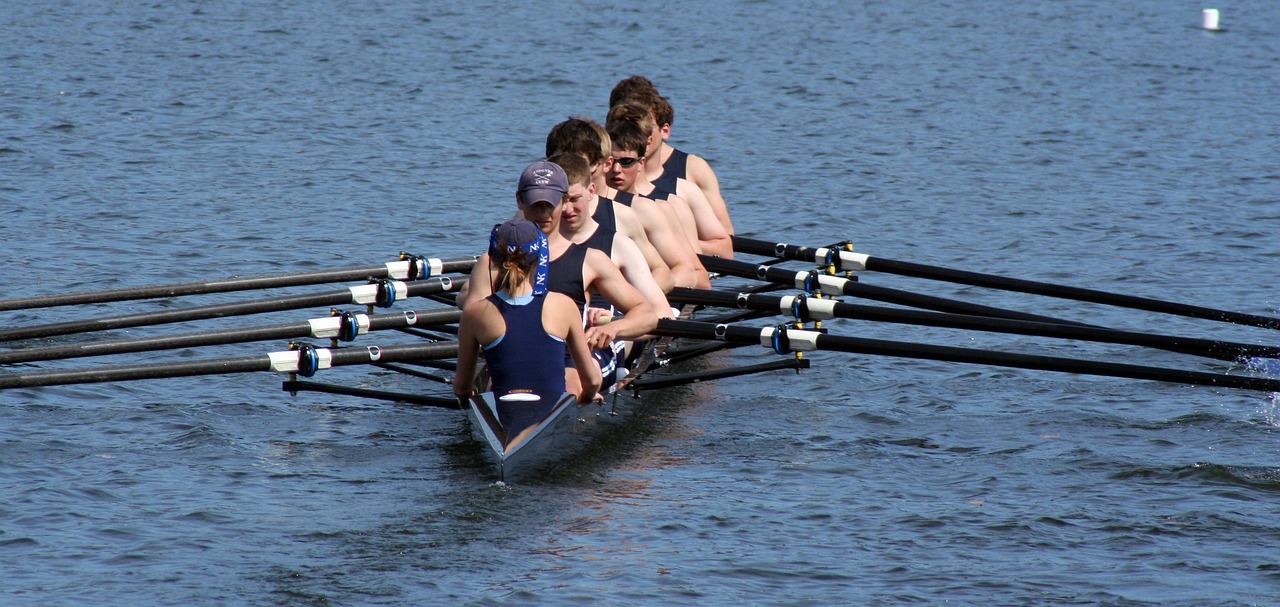
There is a moment before every race when everything goes still. Eight blades hover just above the surface. The coxswain leans forward. Shoulders tighten. Breath shortens. Then comes the call, and the boat surges forward with startling force.
At Olentangy Rowing Club, that explosive start is the visible payoff for months of repetition, conditioning, and quiet discipline that most spectators never see. Based in Lewis Center with a conditioning center in Worthington, the club draws middle and high school students from Columbus, Dublin, Worthington, Westerville, Delaware, and surrounding communities. Most arrive with no rowing background at all. What they bring instead is curiosity and a willingness to work.
A Sport That Finds Its Athletes
Rowing occupies an unusual space in youth sports because it does not require early specialization. Many ORC athletes first step into a boat in eighth, ninth, or even tenth grade. The learning curve is steep but not exclusive. Technique can be taught. Endurance can be built. What cannot be faked is commitment.
In an eight-person shell, timing matters as much as strength. A single mistimed stroke can disrupt speed for everyone. That reality fosters accountability quickly. Teenagers learn that their effort directly affects seven teammates. It is a powerful lesson, and one that often reshapes how they see themselves within a group.
Spring Is Where It Gets Real
Spring is the competitive core of the year, centered on 2,000-meter sprint racing that pushes both aerobic capacity and mental focus. Regattas across Ohio and the Midwest test ORC crews against serious competition, with qualifying boats advancing to the USRowing Youth National Championships in Sarasota. The training that leads to those starting lines is deliberate and demanding.
Athletes spend hours in the erg room developing leg drive and cardiovascular endurance before translating that power onto the water, where balance, rhythm, and precision determine whether the boat actually runs cleanly. It is not recreational rowing. It is structured preparation aimed at measurable improvement.
The On-Ramp and the Opportunity
For newcomers, the Learn-to-Row program offers an entry point without lowering standards. Open to sixth through twelfth graders, it introduces fundamentals in a supportive but focused setting. Families can assess interest and resilience before committing to a full competitive season. That pathway matters because rowing remains one of the rare high-level sports where late starters are not automatically disadvantaged.
ORC alumni have gone on to NCAA programs including Ohio State, Virginia, Texas, Wisconsin, Syracuse, Indiana, Michigan State, Tennessee, and Stetson. College recruitment is never guaranteed, but the pipeline is real for athletes who combine discipline with persistence.
The ORC website has complete details and can be accessed here.
The Commitment Behind the Calm Water
Parents considering ORC should evaluate the commitment honestly. Practices are consistent. Conditioning is intense. Travel is part of the experience. Rowing is not built around highlight clips. It is built around repetition, incremental gains, and shared effort. For students who thrive on structure and measurable growth, it can be transformative. On race mornings, the water may appear calm, but the energy beneath it is anything but.
When the starter’s call rings out and the shell accelerates as one, spectators witness the outward expression of hundreds of unseen practices. At Olentangy Rowing Club, the river becomes a classroom, and the lesson is clear: move together, or not at all.
Registration is now open for spring; information can be found here.
Image by Peter Benoit from Pixabay