
By 1808Delaware
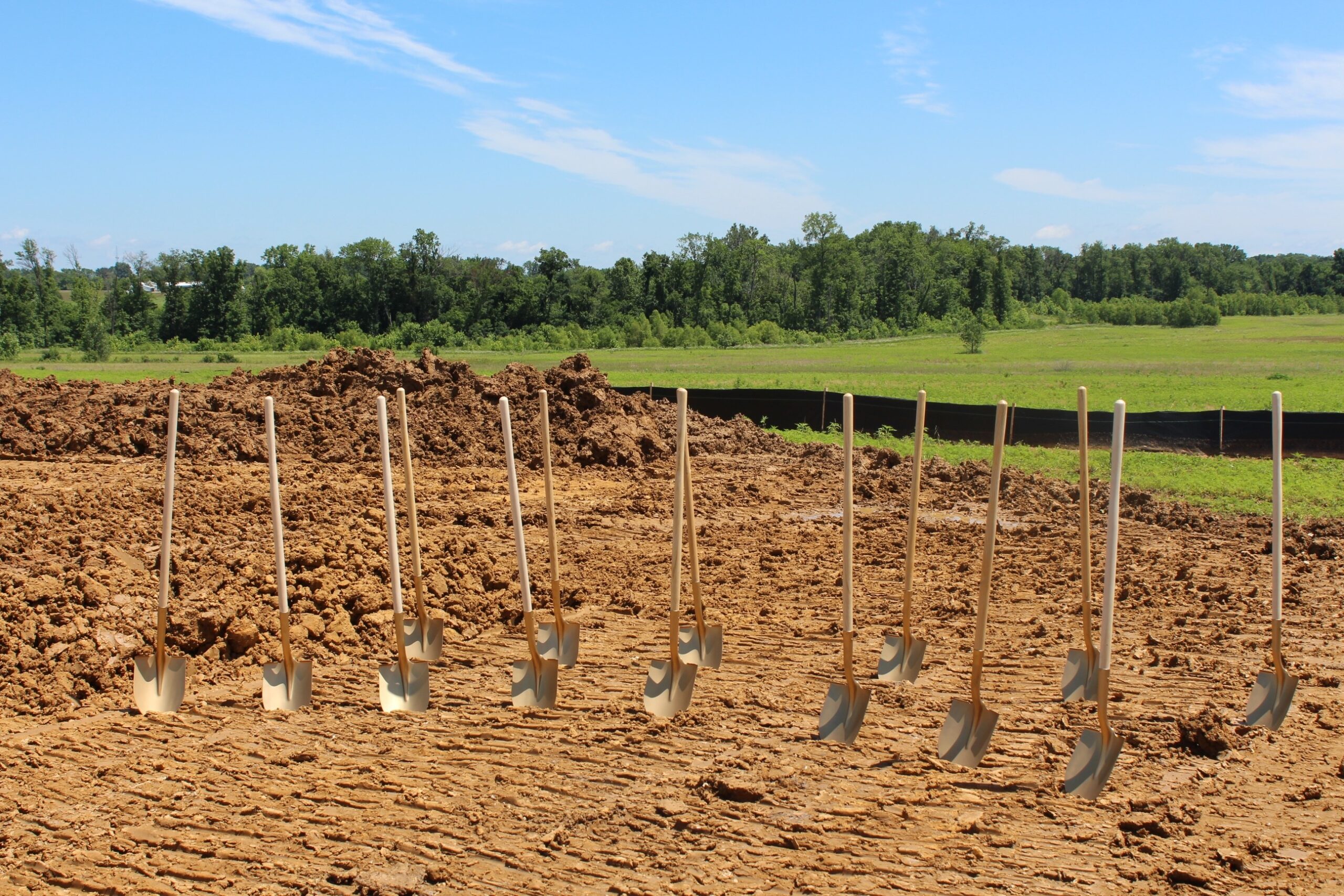
This Thursday at 5:00 PM, district leaders, families, and local officials will gather on Bean-Oller Road for the groundbreaking of Elementary School 18. It’s a familiar kind of event for Olentangy, but this one carries more weight than most. What looks like a routine ceremony is really a response to sustained, accelerating growth that is now reshaping how the district operates.
Why This Moment Matters
Olentangy has added about 5,000 students over the past decade and expects roughly the same increase again over the next ten years. That growth is not abstract. It shows up every day in crowded cafeterias, full classrooms, and the quiet reliance on portable units that were never meant to be permanent.
Eight of the district’s 17 elementary schools are already at or above capacity, which leaves little room for flexibility. Without new space, the system begins to strain in ways that affect scheduling, class sizes, and the overall student experience. ES 18 is designed to relieve that pressure before it reaches a breaking point.
Location and Design
The site at 2745 Bean-Oller Road sits in Liberty Township, squarely in one of the fastest-growing parts of Delaware County. Residential development continues to move north and west from Columbus, and this area has become a focal point for that expansion. The placement of ES 18 is not incidental. It is meant to absorb enrollment from the northwest portion of the district, where growth has been most concentrated.
The building itself will follow Olentangy’s established model for large elementary schools. Plans point to a facility of roughly 80,000 to 85,000 square feet, serving PreK through 5th grade, with capacity in the range of 650 to 750 students. This is not a small neighborhood school. It is designed to take in a substantial number of students from overcrowded buildings once attendance boundaries are redrawn.
Funding and Strategy
The $235 million bond that funds both Elementary School 18 and High School 5 is structured as “no new millage,” a phrase that played a central role in gaining voter approval. In practical terms, the district is replacing old debt with new debt, keeping the tax rate stable while redirecting existing revenue toward new construction. It is a financially efficient approach, but it still represents a long-term commitment supported by taxpayers. This plan followed a failed attempt in March 2024 that asked for a broader package and a tax increase. What returned to voters in November 2025 was narrower and more focused, centered only on the most immediate needs. That adjustment proved decisive, and the revised proposal passed.
What Comes Next
Construction is expected to continue through 2026 and into 2027, with the school opening for the 2027–28 academic year. The more complicated phase will come afterward, when district leaders redraw attendance boundaries and shift students into the new building. Those changes are necessary, but they are rarely simple, and they tend to draw close attention from families.
Even with ES 18, the long-term outlook points to continued demand for new space. District projections show a shortfall of 13 classrooms by 2026–27, growing to 44 by 2030–31 and reaching 100 by 2035–36. In that context, this groundbreaking is less a finish line and more a marker along the way.
Image by April Bryant from Pixabay