
By 1808Delaware
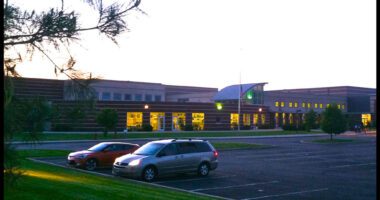
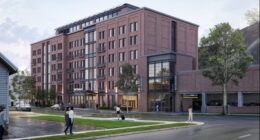
Buckeye Valley Local Schools is asking the community to help shape what may become one of the most important facilities decisions in the district’s recent history: the future of its high school. Superintendent Ric Stranges and the district’s Facilities Committee have been working on long-range infrastructure planning, including initial recommendations for a brand-new high school. With preliminary design concepts now in hand, district leaders say the process has reached a point where public input is needed before next steps are taken.
A community meeting is set for Wednesday, May 27 at 6:00 PM in the Middle School Library. Residents, parents, staff members, students, and other community members are invited to attend, review early concepts, ask questions, and share thoughts about the future of Buckeye Valley Local Schools.
A District At A Turning Point
Buckeye Valley has long occupied a distinctive place in northern Delaware County. Based in the Delaware, Ashley, and Ostrander area, the district covers roughly 206 square miles across four counties. It remains rooted in a rural identity, with strong ties to farming communities, small towns, and long-established families. At the same time, Buckeye Valley is increasingly feeling the effects of growth moving north from Columbus and Delaware. Residential development across the attendance area has brought new families, new students, and new expectations for school facilities.
The district currently operates two elementary schools, East Elementary in Ashley and West Elementary in Ostrander, along with one middle school and one high school on Coover Road just north of the City of Delaware. Total enrollment is now in the range of 2,300 to 2,400 students, and planning reports have pointed to steady growth over the last decade.
That growth has made facilities planning more than a future concern. It has become a present-day issue.
Why The High School Matters
In Buckeye Valley’s current structure, the district’s elementary schools feed into a single middle school and a single high school campus. As larger student groups move upward through the system, the pressure becomes especially noticeable at the secondary level.
That is why the discussion about a new high school is central to the district’s broader planning effort. A new building would not simply be a construction project. It would represent a long-term decision about capacity, educational programming, student experience, transportation, community identity, and how the district prepares for continued growth. For a district that still describes itself as rural, the question is not only how to make room for more students. It is how to grow while preserving the character that has shaped Buckeye Valley for generations.
Rural Roots, Suburban Pressures
Buckeye Valley’s story reflects a larger pattern unfolding across northern Delaware County. Areas that were once clearly rural are now connected more closely to the Columbus metropolitan economy. Families may live near Ashley or Ostrander while working in Delaware, Powell, Dublin, Worthington, Westerville, or Columbus.
That shift creates a hybrid district identity: part rural, part suburban, and increasingly part of one of central Ohio’s fastest-changing growth corridors.
The challenge for school leaders is to plan facilities that serve today’s students while anticipating tomorrow’s enrollment. That includes evaluating building needs, managing capital planning, considering transportation demands, and making sure any major project reflects community priorities.
A Chance To Shape The Conversation
Wednesday’s meeting is intended to bring that conversation directly to the public. District leaders are expected to share preliminary design concepts and discuss early recommendations developed through the facilities planning process. Community members will have the opportunity to respond, raise concerns, and offer input before the district moves further into planning.
For Buckeye Valley, the meeting is not just about drawings or building options. It is about what residents want the district to become as growth continues. The district’s academic performance, community engagement, and small-town traditions remain important parts of its identity. The question now is how those strengths can be carried into the next generation of school facilities.
The meeting will take place Wednesday, May 27 at 6:00 PM in the Middle School Library.