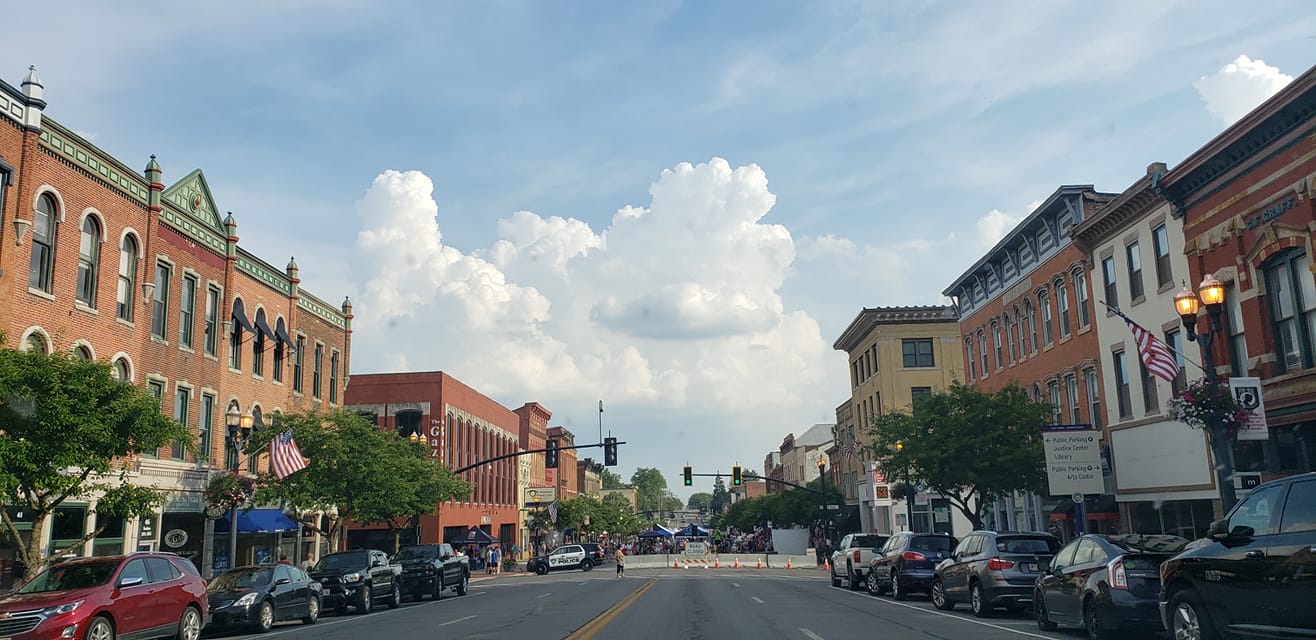

By 1808Delaware
Ohio’s most congested north-south corridor may finally see relief. Governor Mike DeWine has signed a new two-year state transportation budget into law, earmarking funds for a long-discussed plan: the development of a U.S. Route 23 bypass north of Columbus. The move aims to ease congestion, reduce travel times, and improve safety on a corridor that’s operating at 30% over capacity.
At the heart of the initiative is a $500,000 appropriation to fund preliminary engineering and planning work for a bypass connecting U.S. 23 to Interstate 71. That connection would divert traffic away from the jam-packed 23-mile stretch between Worthington and Waldo in southern Marion County. The Ohio Department of Transportation (ODOT) and the Ohio Turnpike Infrastructure Commission must present a detailed plan by October 1.
A Corridor in Crisis
For years, U.S. 23 has been a notorious headache for commuters and truckers alike, with frequent traffic lights, heavy volumes, and safety concerns. A recent feasibility study conducted by ODOT made the case for change, calling for the elimination of traffic signals and improved traffic flow to reduce the frequency of crashes.
Plans to reconstruct much of U.S. 23 through Delaware County are already in motion, with projections exceeding $1.6 billion in costs and a timeline of over a decade. These improvements include a series of new interchanges, overpasses, and collector roads—but until recently, there was minimal talk of bypassing the region entirely.
Eyes on the Future: A Bypass Blueprint
The new bypass proposal opens the door to several possibilities. According to the Legislative Budget Office, the state is now considering three primary options for connecting Route 23 to I-71:
- Expanding Route 229 or a similar route in northern Delaware County.
- Constructing a new freeway in the same region.
- Developing a toll road or freeway between Route 529 and Waldo, heading east toward I-71 north of Marengo in Marion and Morrow counties.
Each option is still in the early conceptual stage, but the goal is the same: to redirect regional traffic, strengthen economic connectivity, and ease the burden on Delaware County’s roads.
Support Grows Across the State
State Senator Theresa Gavarone is among those championing the plan, pointing to its economic and logistical benefits for Northwest Ohio. Local stakeholders are also expressing support. Businesses along the corridor see potential for improved shipping times, while residents are hopeful for a future with fewer traffic headaches.
What’s Next?
Though the new law does not mandate construction—only the study—it signals a significant shift in how Ohio is approaching its transportation challenges. The bypass conversation, once dismissed or delayed, is now front and center.
With a deadline of October 2025 for a detailed plan, the coming months will be critical in determining the feasibility and design of the project. Should the study yield a green light, the project could fundamentally reshape travel patterns and open a new chapter for U.S. 23.
For now, Ohioans await the outcome of a study that could finally put an end to a decades-long gridlock dilemma.