
By 1808Delaware
After years of careful feeding, medical care, and patient monitoring, a group of rehabilitated manatees has finally returned to Florida waters. For seven animals that spent time at the Columbus Zoo and Aquarium, the release marks the end of one chapter and the uncertain beginning of another: life in the wild.
Most of these manatees began as orphans or young animals suffering from cold stress syndrome between 2022 and 2025. They were rescued by the Florida Fish and Wildlife Conservation Commission and other partners, too small or too compromised to survive on their own. What followed was a multi-year effort that stretched far beyond the state’s borders.
A National Network Working for One Species
The rescues and releases are coordinated through the Manatee Rescue & Rehabilitation Partnership, a cooperative network of nonprofits, aquariums, zoos, universities, and state and federal agencies. It is one of the most coordinated marine mammal recovery efforts in the country. Facilities across the eastern United States took part in the care of these animals. Among them were Columbus Zoo and Aquarium, Cincinnati Zoo & Botanical Garden, ZooTampa at Lowry Park, SeaWorld Orlando, Georgia Aquarium, and Zoo Miami, along with research institutions and conservation groups.
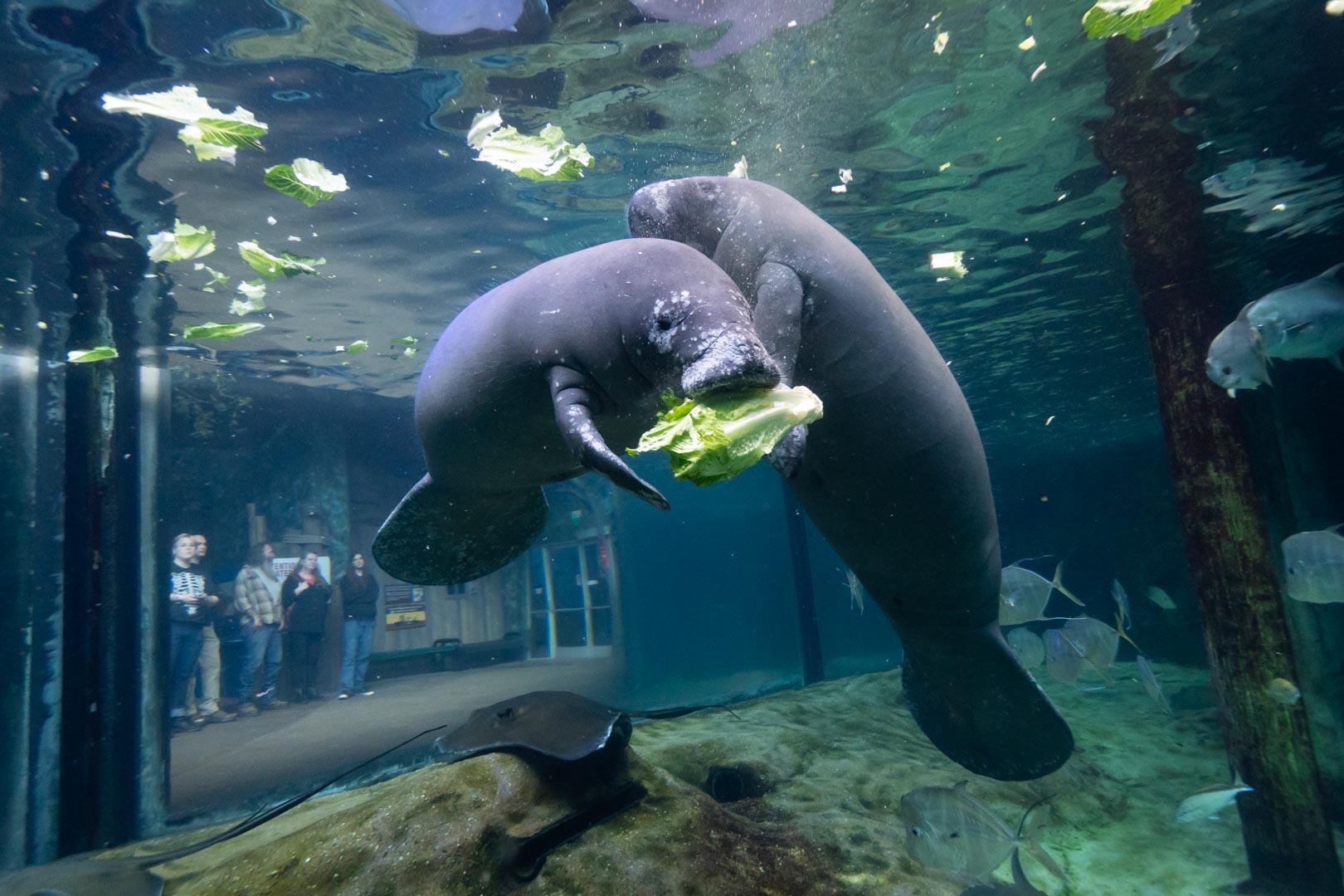
For the Columbus Zoo, the releases are tangible proof that long-term investment pays off. While in Ohio, these animals received daily veterinary oversight, careful diet management, and space to grow. The goal was simple but demanding: reach a healthy, releasable weight and build strength for independent survival.
At the Cincinnati Zoo, three manatees—Vora, Lilypad, and Orchid—gained more than 250 pounds each during their stay, with Orchid gaining nearly 400. Together, they consumed more than 60,000 pounds of lettuce. It sounds almost excessive until you remember that adult manatees can eat 10 percent of their body weight each day.
Back to Warm Water
The manatees were released at traditional winter gathering sites in Florida, including Blue Spring State Park, Crystal River, Warm Mineral Springs, and the TECO Apollo Beach power plant. These locations provide the warm water refuges manatees depend on during colder months. But release is not the end of supervision. It is the start of a new phase.
Under contract with the partnership, the Clearwater Marine Aquarium Research Institute fits many of these “naive” manatees with GPS tracking devices. For animals that have never navigated Florida’s waterways on their own, tracking is more than research. It is a safety net.
If a manatee stops moving normally, shows signs of distress, or fails to locate warm water, researchers can intervene. Without that tracking gear, there is no early warning system. Conservation officials are urging boaters and waterfront residents not to approach tagged animals or tamper with their equipment. For these young sea cows, the gear truly is a lifeline.
Threats Still Faced
Florida manatees continue to face serious threats, from habitat loss and water quality decline to boat strikes and cold stress events. Their survival depends not only on emergency rescues but on sustained, coordinated care and long-term habitat protection.
That is what makes the partnership model significant. It extends manatee conservation far beyond Florida’s borders. When an animal recovers in Ohio or Georgia before returning south, it reflects a shared national responsibility for a species that defines Florida’s coastal ecosystems.
For institutions like the Columbus Zoo, there is also a public dimension. Millions of visitors see these animals up close during rehabilitation. They learn that manatees are not simply gentle curiosities but indicators of environmental health. The story of rescue and return becomes a lesson in stewardship.
A Measured Hope
Releases like these are celebratory, but they are not sentimental. Survival in the wild is never guaranteed. Young manatees must learn where to find warm water in winter, how to navigate boat traffic, and how to forage effectively. Still, each successful release shifts the balance slightly in the species’ favor. It represents years of collaboration, thousands of pounds of food, countless veterinary checks, and the quiet daily work of keepers and researchers.
For the seven manatees that once swam in Ohio tanks and now glide through Florida springs, the journey has come full circle. The real test begins now, in the open water where they belong.
Source, Photos: Columbus Zoo & Aquarium
We now feature a dedicated Columbus Zoo & Aquarium page.
Bookmark it to explore ongoing coverage.